
The UAE’s strategic location at the intersection of Asia, Europe, and Africa makes it a key logistics hub for global trade, connecting major supply chains through critical corridors such as the Strait of Hormuz. However, ongoing geopolitical tensions are disrupting both maritime and air logistics — reducing predictability and reinforcing the need for alternative routing strategies.
Current operational impacts:
- Vessel rerouting and port call changes
- Airspace restrictions affecting flight schedules
- Increased transit times and operational uncertainty
For companies importing into or exporting from the UAE, maintaining cargo flow now requires a combination of alternative gateways, multimodal solutions, and cross-border coordination.
To support ongoing operations, the following solutions can be implemented to ensure cargo continues moving despite current disruptions.
1. Sea to Road (Sohar Port to UAE):
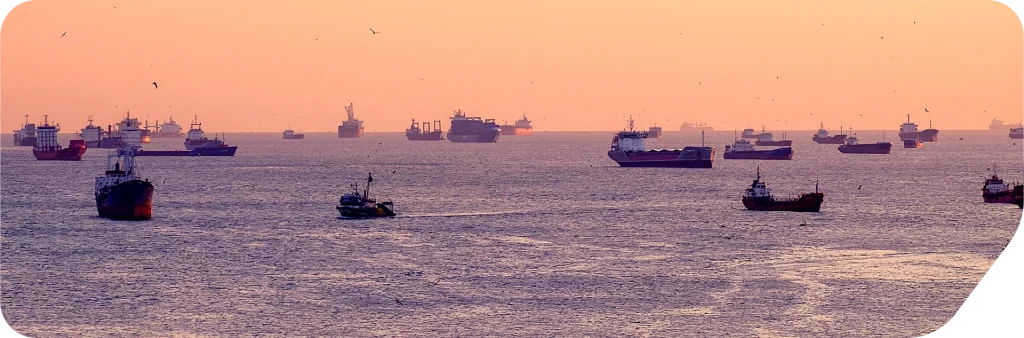
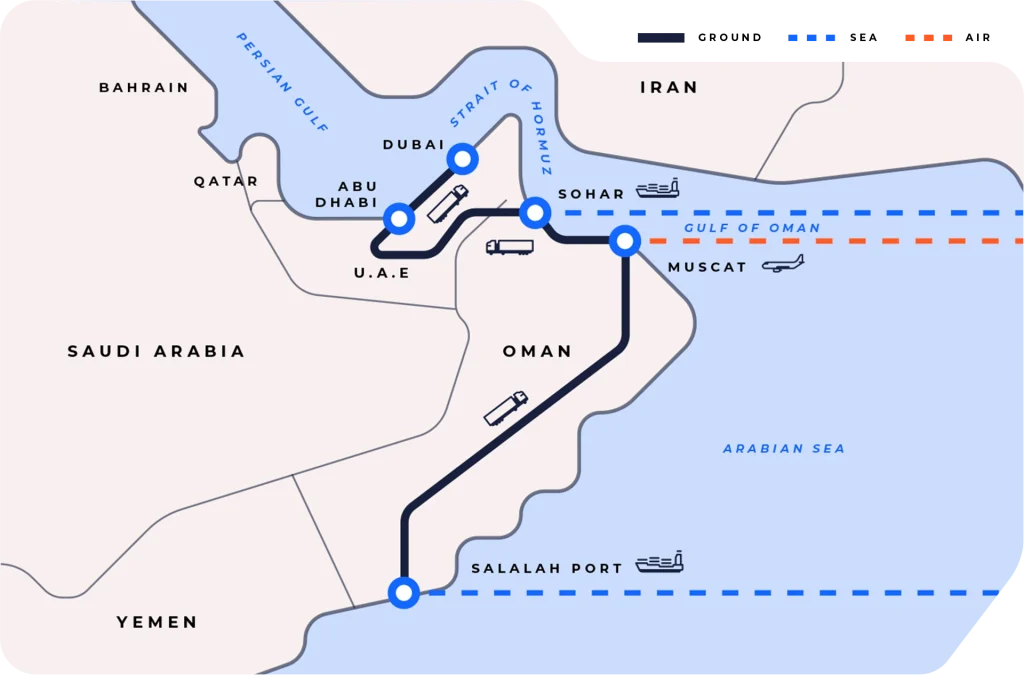
As carriers adjust routes to avoid high-risk areas in the Arabian Gulf, many vessels are now calling at Sohar Port (Oman) instead of Jebel Ali.
This routing is supported by Oman’s official customs transit framework, which enables cargo to move under a controlled transit regime from Omani ports into GCC countries.
Cargo can still reach the UAE efficiently by combining ocean freight with inland trucking.
Operational flow:
- Cargo origin: Asia, Europe, and other global trade lanes
- Discharge at Sohar Port (Oman)
- Cross-border bonded trucking into the UAE
Transit time:
- Sohar to JAFZA: 7–8 working days
- Salalah to Dubai: 7-10 working days
- Salalah to JAFZA: 7–10 working days
2. Air + Road via Muscat
Due to airspace restrictions in parts of the Middle East, airlines are increasingly routing cargo through Muscat International Airport (Oman).
The same customs transit structure applies to air cargo arriving in Oman, allowing seamless onward movement into the UAE via bonded trucking.
This creates a reliable alternative for urgent shipments into the UAE.
Operational flow:
- Cargo origin: Asia, Europe, and major global air hubs
- Arrival at Muscat International Airport
- Bonded trucking into the UAE
Transit time:
- Muscat to JAFZA: 4–5 working days
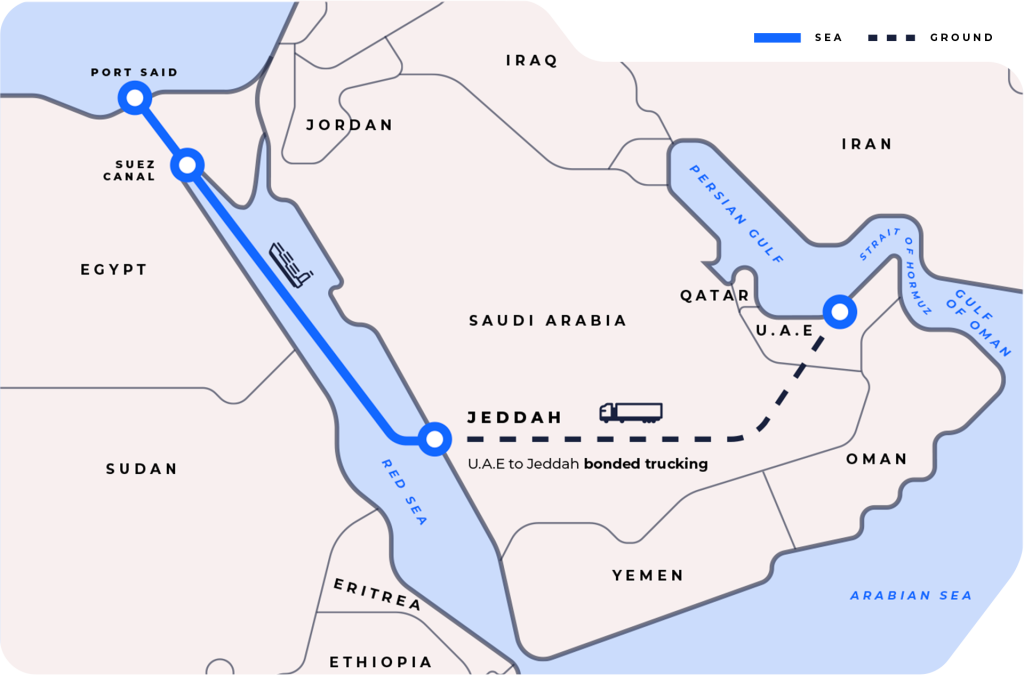
3. Bonded Trucking: UAE to Jeddah
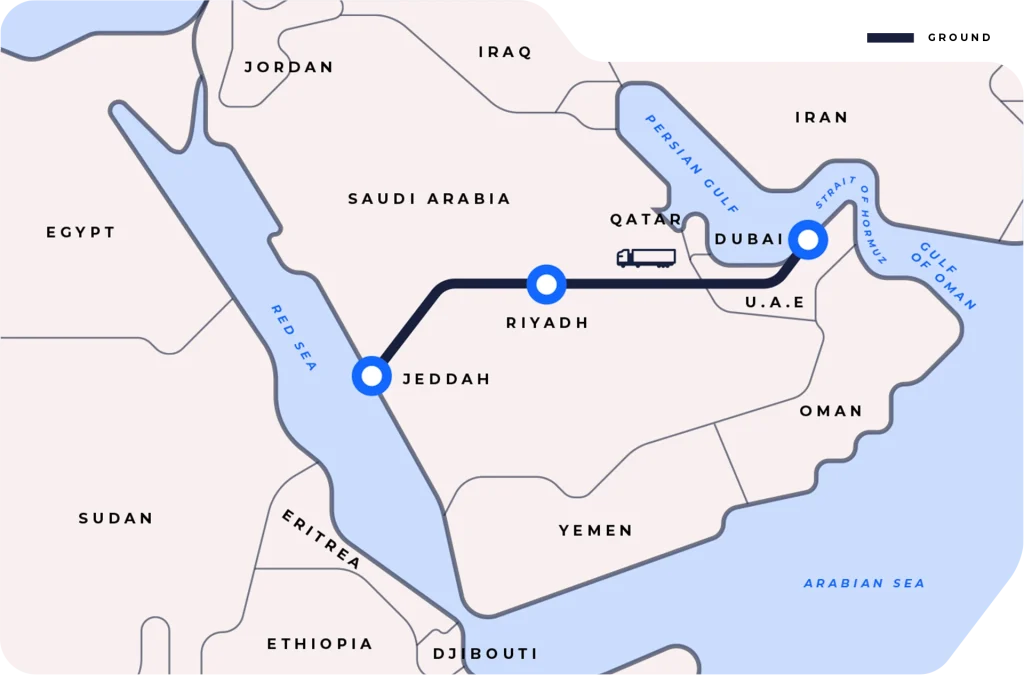
As of March 2026, the UAE–Saudi Arabia border (Al Ghuwaifat / Al Batha) remains open, allowing continuous cross-border logistics operations.
Exporters can use Jeddah as a transshipment hub to connect with global shipping routes.
Operational flow:
- Cargo departs from the UAE
- Bonded trucking to Jeddah terminal (cross-stuffing and container loading)
- Connection to ocean services
Transit time:
- UAE to Jeddah: 7–8 working days
4. Jeddah as a strategic transshipment hub
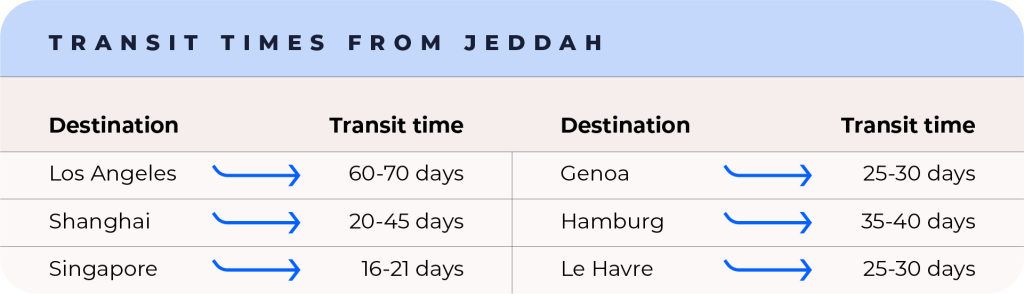
Jeddah Islamic Port remains fully operational under ISPS Security Level 1, with high vessel traffic and no major operational restrictions.
It continues to serve as a key hub for Red Sea shipping and an alternative during regional disruptions.
5. Road service from Germany to UAE
An independent routing alternative
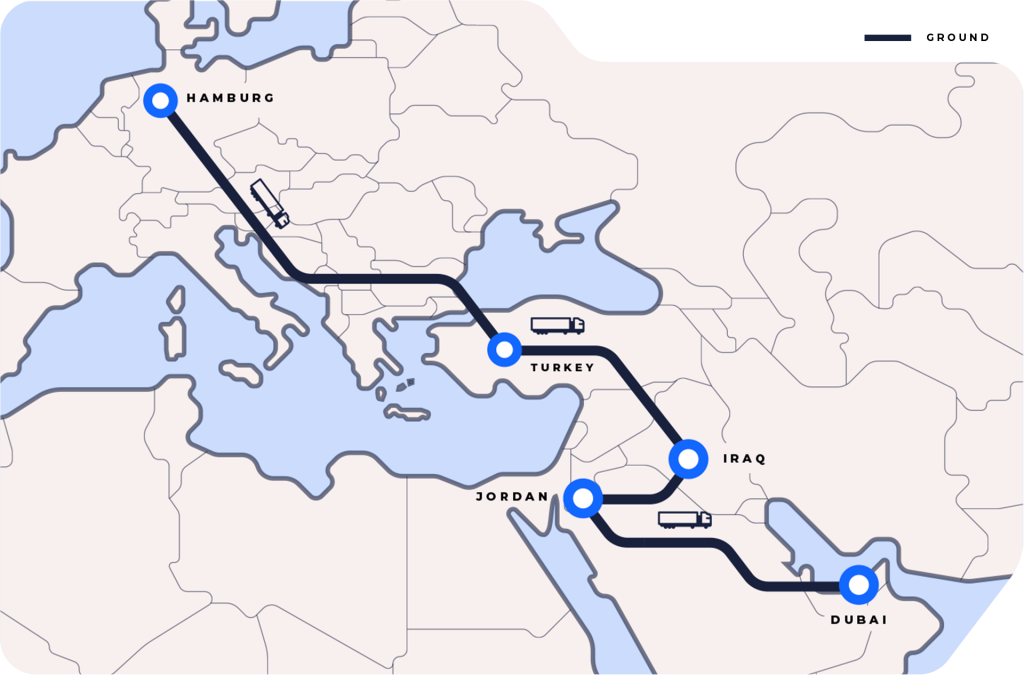
For certain cargo profiles, long-haul road transport from Europe to the UAE provides a fully independent option from maritime and air disruptions.
Typical routing:
- Germany → Central/Eastern Europe → Turkey → Middle East → UAE
Distance:
- Approximately 5,000–6,000 km
Transit times:
- Germany to UAE: 12-14 days
Operational considerations:
- Multi-border crossings
- Routing via Turkey with connections toward Jordan and Saudi Arabia
Beyond routing design, xpd global supports your operations with end-to-end coordination across the region.
With our own office in the UAE, we bring the local expertise required to manage current disruptions and ensure smooth execution at every stage.
Our approach is supported by:
- Transit customs clearance coordination
- Cross-docking operations
- Bonded trucking solutions
- Border customs clearance management
If your cargo is impacted by current disruptions, connect with our xpd global team to define the best alternative route for your shipments.
You can also contact us at: