
Not every operation can be supported the same way
Part 3 of the fast, friendly & dedicated editorial series. This installment reflects on what happens when specialized manufacturing operations are supported through uniform logistics models—where service levels remain constant even as exposure, tolerance for error, and operational consequences vary dramatically from one supply chain to the next.
In specialized manufacturing, logistics no longer operates at the margins of the business; it functions as a continuity mechanism embedded within the production system itself.
Global industries built on precision—automotive, aerospace, high-tech, healthcare, retail, food and beverage, energy, and more—are not driven by logistics alone. They are governed by synchronization. Production systems are engineered around narrow tolerances, coordinated suppliers, evolving compliance requirements, and compressed timelines. When one variable shifts, consequences travel quickly across the system.
For example, in the electric vehicle sector, Chinese automakers now generate over 50% of global EV sales through a combination of structural advantages, including systemic production speed—faster innovation cycles, supply chains engineered to absorb rapid design change, disciplined cost structures, and compressed time-to-market—allowing the entire system to absorb volatility while maintaining competitive momentum.

The challenge is not whether freight can move. The challenge is whether the operating model behind logistics is configured to protect the production system when exposure changes.
When standard logistics structures fall short
Many logistics models perform effectively when requirements are predictable, scopes are stable, and decisions can be addressed sequentially. They are designed to execute defined tasks within known parameters.
Specialized industries do not operate inside those parameters.
A few hours of delay in a just-in-time or just-in-sequence production environment can escalate into line-side disruption. In highly regulated environments, documentation and compliance can carry the same operational weight as transit times. In synchronized launch cycles, timing misalignment across regions and suppliers can instantly compress options. And in tightly controlled or temperature-sensitive supply systems, a single deviation—whether in documentation, handling, or thermal stability—can trigger holds, audits, product degradation, or irreversible loss.

In these environments, the risk is not complexity itself. The risk is treating different levels of exposure as if they were equal. This is where misalignment begins.
Not because freight fails to move, but because the model behind logistics is not structured around consequence. When critical flows are processed through the same decision paths as routine shipments, escalation becomes a workflow instead of a decision system, accountability fragments across handoffs, timing dilutes, and interpretation slows.
The cost is rarely immediate collapse. Instead, it builds as accumulated strain, with decisions made with less room, less context, and less structural support than the operation actually requires.
And this gap becomes more visible as manufacturing footprints continue to shift under sustained geopolitical and regulatory pressure. According to EY, 93% of manufacturers are rethinking their footprint in response to sustained geopolitical pressure—not as a contingency move, but as an ongoing redesign of where production, sourcing, and risk should sit. Production is being redistributed, supplier networks are being rebalanced, and sourcing strategies are being redesigned.
In this environment, logistics decisions no longer sit at the edge of the business. They move into the core of operating design.
When being dedicated starts to matter
Once logistics decisions sit inside the operating core, differences stop being theoretical. They become operational.
Not every shipment carries the same exposure.
Not every delay has the same consequence.
And not every operation can be supported through the same model.
Some deviations can be absorbed. Others trigger chain reactions that narrow options, increase risk, and divert attention from the work that keeps production stable.
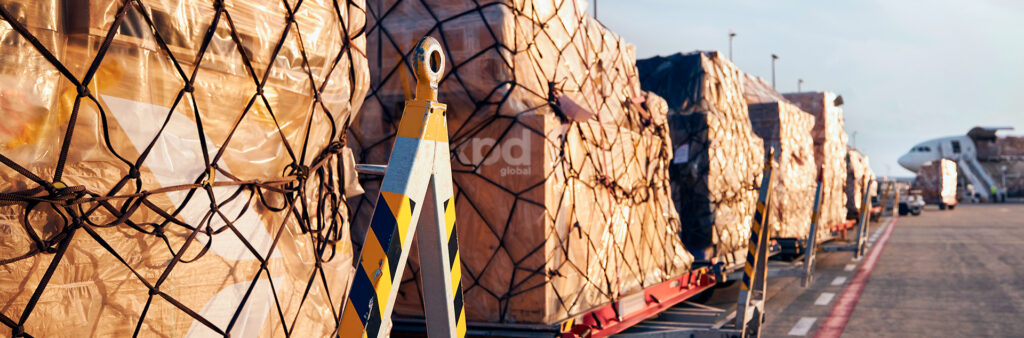
This is where dedicated logistics starts to matter.
Dedicated is not an added service layer, nor a premium label. It is a system built on the deliberate configuration of the logistics model based on the level of consequence each movement has for the production system.
It begins by recognizing that exposure varies—not only by industry, but by lane, supplier, component, timing, and moment.
And when exposure rises, the model changes—not in isolated actions, but across its configuration.
Decision paths adjust by criticality, controls tighten as tolerance narrows, and alternatives are designed before they are needed, ensuring ownership remains clear from origin to destination, even across regions.
Routes are engineered not only for efficiency but also for continuity; escalation structures align with consequences rather than hierarchy; talent is assigned based on complexity and risk profile, not default availability; and risk is embedded in the move from the start rather than treated as an exception.
In specialized manufacturing environments, this is not a luxury. It is the minimum required to operate without transferring unnecessary exposure into the production system.
This is not about doing more, but about configuring differently at every structural layer of the system.
The xpd global standard of DEDICATED
So, what actually makes logistics truly dedicated?
Up to this point, dedicated has been described as the deliberate configuration of the logistics system according to exposure. But that level of configuration does not come from reacting faster or offering more options. It requires an operating model intentionally built to adjust alongside the business.
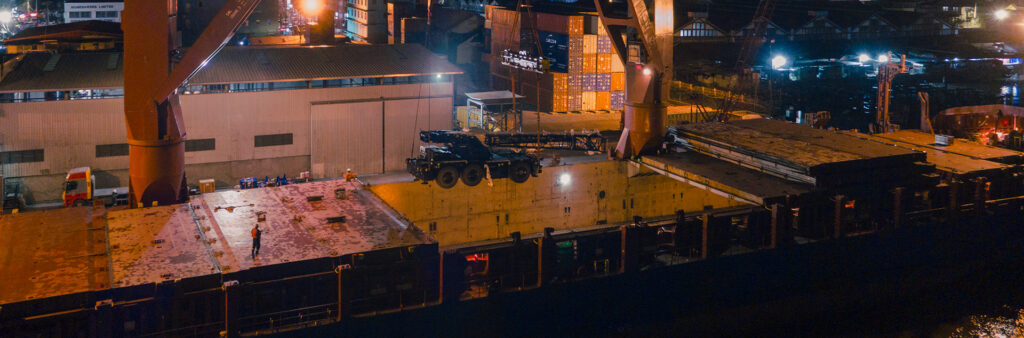
At xpd global, dedicated is an operating standard designed to match different levels of logistics exposure and protect continuity when precision leaves no room for error.
It starts with criticality-led design. Not every lane, part, or supplier carries the same operational consequence. Each movement is classified according to what happens if it fails, and the model is configured accordingly—before execution begins.
It continues with allocation by design. Talent, carrier alignment, and capacity strategy are assigned based on complexity and risk profile. Decision rights are defined in advance. Escalation paths are structured around consequence. When exposure increases, response windows tighten through predefined control mechanisms.
And it is sustained through embedded controls. Multi-route planning is engineered upfront. SOPs define triggers and responsibilities. Ownership remains clear from first signal to final resolution. Accountability is not dispersed as conditions shift.
What makes this consistent is not individual heroics, but organizational design. Dedicated logistics depends on how the system reallocates attention, authority, and alternatives when the production system cannot absorb ambiguity.
Because when exposure increases, the question is no longer whether freight can move. The question is whether the operating model is adaptable enough to change with it.
Learn how our operating model supports dedicated logistics across complex global supply chains.
Sources referenced for the data points and research ideas mentioned
Reuters — Chinese automakers build significant leads in zero-emission vehicle market, research finds: https://www.reuters.com/business/autos-transportation/chinese-automakers-build-significant-leads-zero-emission-vehicle-market-research-2025-06-17/
EY — How manufacturers can adapt for success amid rising geopolitical uncertainty: https://www.ey.com/en_gl/insights/advanced-manufacturing/how-manufacturers-can-adapt-for-success-amid-rising-geopolitical-uncertainty